Best Subscription Bundles for Indie Game Development
Specialist stacks or one platform: match the choice to your bottleneck.
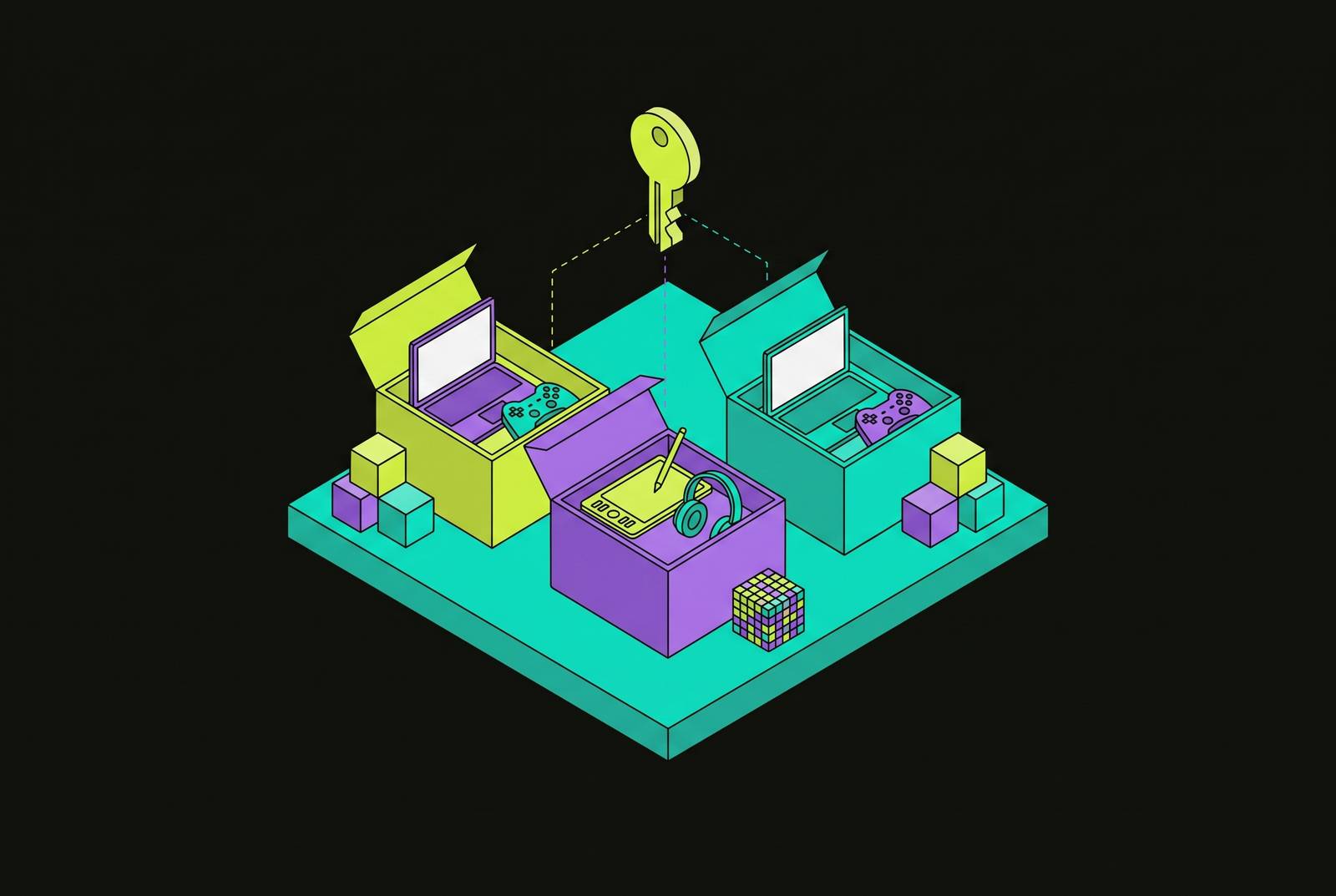
In 2026, the central choice is between separate specialists and a consolidated platform. Specialists do more within each job, while bundles cut the work of integration and managing accounts. The right structure follows the game’s production needs, release cadence, and main bottleneck.
Why indie developers are rethinking their AI subscriptions in 2026
AI spending now covers code, art, audio, and dialogue, where it once fell within a single software budget. A developer may start with code assistance, add image generation, then pay separately for 3D assets and audio. Each purchase can make sense on its own, yet together they become a commitment the developer never weighed up as a whole.
The costs extend beyond the renewal charge. Each service has its own credits, rate limits, and licensing terms, while monthly subscriptions renew whether or not a game ships. For developers working intermittently, payment and production can drift apart. The decision therefore has two paths, which are assembling specialists whose output justifies separate subscriptions or consolidating around a platform that covers more of the workflow.
What the full indie pipeline actually requires from AI
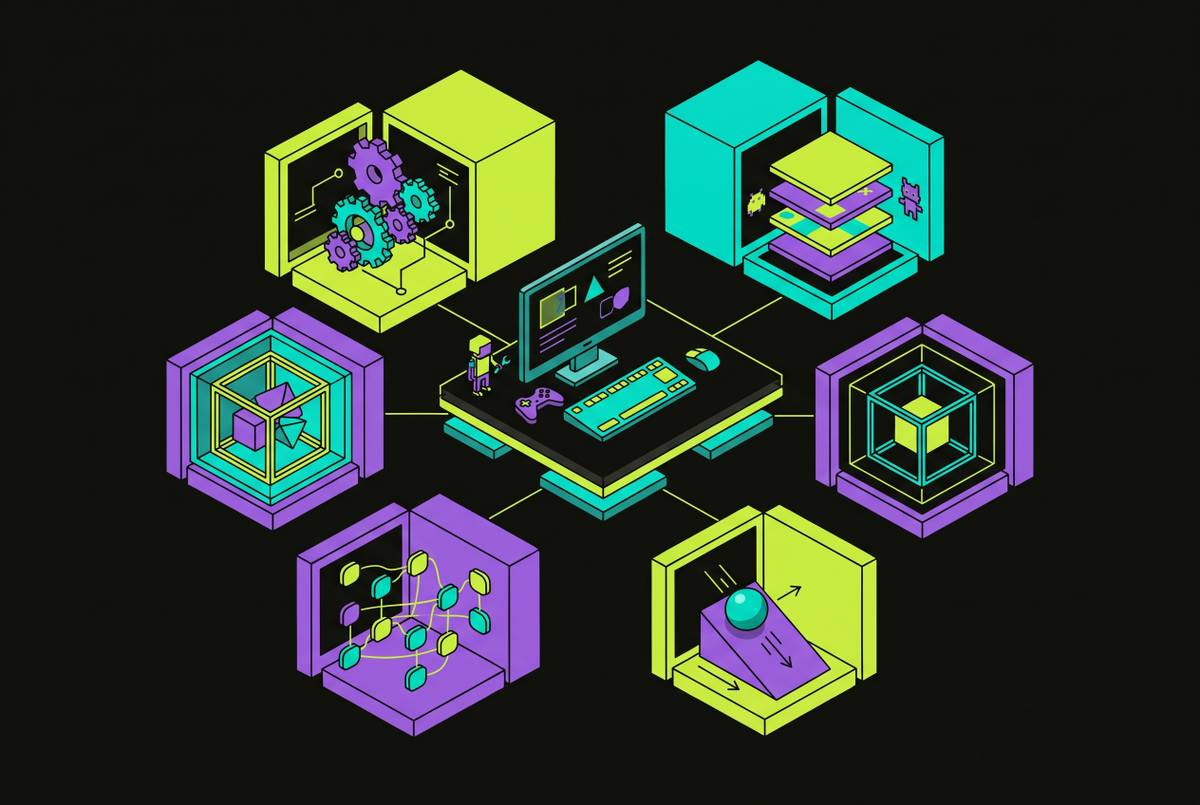
A complete pipeline spans seven distinct jobs, including concept, code and engine work, 2D art, 3D, audio, NPCs and dialogue, and shipping. Concept work establishes what the game is trying to become, while code and engine work turn that idea into a playable project. Art, models, and audio supply its assets, and NPCs and dialogue address its characters and conversations. Shipping completes the path from a working project to a build that can be shared.
A moodboard and a production-ready image do different jobs. So do a generated script and a script attached to the right objects inside a working scene. “Code assistance” can therefore describe only part of the work a developer needs completed. A comparison that treats file generation and project integration as equivalent misses a substantial part of the workload.
A solo developer making a 2D game may need only three or four pipelines, while a small team making a 3D action game may use all seven. That difference changes both the value of specialist depth and the usefulness of a broad bundle. The relevant comparison is the cost of supporting the pipelines the project actually runs.
What the specialist-stack approach actually costs and delivers
The strongest case for specialists is precise control over individual outputs. Scenario trains custom models on a developer’s art style for visual consistency, while Midjourney supports moodboards and concept art. Stable Diffusion XL with ControlNet supports deterministic work that must match fixed perspectives or compositions. For a game whose visual identity depends on consistency, those distinctions can justify a dedicated art subscription.
Meshy, Tripo, and Rodin generate clean meshes with PBR textures quickly, and Tripo’s rigger handles non-humanoid creatures as of February 2026. Suno and Udio support original soundtracks, both with commercial tiers. ElevenLabs offers NPC voice quality, multilingual support, and emotion control.
Developers with their own engine setup, CI/CD, and asset pipeline can use AI services to fill specific gaps while keeping the rest of their workflow. In that situation, separate tools are components of an existing system. The developer is buying a particular capability. That makes it easier to judge how much better the tools are at a job the developer needs done.
Five to eight accounts mean separate logins, credit balances, rate limits, export formats, and licensing clauses. That coordination work appears on no individual subscription line. A tool that seems cheap on its own can be part of a costly set of monthly bills, especially when tools in several categories go unused between bursts of work. Specialist depth has its strongest economic case when most pipelines run at meaningful volume every month, and a weaker one when limited time leaves paid capacity idle.
What bundled platforms cover and where they make trade-offs
Bundled platforms offer breadth with fewer administrative boundaries. Their central advantage is a shared interface and billing relationship across work that would otherwise involve separate services. For a solo developer or a small team, that can reduce the effort spent switching tools and managing accounts. A comparison based only on the quality of individual outputs leaves that production benefit out.
Tool access and engine integration are different propositions. A chat model such as ChatGPT or Claude can write game code but hand back files that the developer must place into a project, connect, and debug. An AI-native engine can instead operate inside the project, building scenes, attaching scripts, and setting up physics and input. The distinction is whether the platform produces material for development or performs development work within the project.
That distinction changes what consolidation can achieve. A broad bundle may simplify purchasing without removing every export, import, or wiring step. An integrated platform addresses more of that work directly. For a time-constrained developer, the value of consolidation therefore depends on where the interruptions occur. Breadth is useful only when it covers the work the project needs.
The trade-off is depth in a specific task. A custom-trained art model or a highest-tier frontier model for a niche job may outperform the bundled option on that requirement. Bundles do not need to win every comparison to be useful.
The education and tooling bundle category: Fanatical and course bundles
Education bundles solve a different purchasing problem. The Fanatical Blender 3D & Game Development Bundle offers learning content across a range of price tiers and covers many items. Such bundles can shorten the skill ramp for specific engines or tools, often at substantially below-retail prices and without a recurring subscription. They are knowledge purchases. They do not provide ongoing AI access, generate assets, or run code agents.
Learning and production tools can nevertheless complement each other. A fundamentals course can give a non-technical developer the conceptual grounding to direct AI, while an AI-native engine subscription provides the means to execute without hand-writing every script. The first decision is therefore categorical, separating education, tool access, and integrated development before comparing offers within each group.
How to decide which structure fits your situation
The choice depends on three things: which pipelines the tools cover, how often the developer ships, and whether quality or integration time is the main bottleneck. Developers should assess those variables against the current project. A subscription for a category the game does not use is a poor buy even if its output is impressive elsewhere. A broad bundle may also offer little help if the developer needs the best results in just one narrow task. Actual production demand is the starting point.
A specialist stack fits sustained, demanding use across most of the seven pipelines. The tools are easier to pay for as a group when each one produces useful work every month. Specialists also fit projects with a non-negotiable requirement in one category, such as custom-trained 2D style consistency for a visually distinctive game. Existing infrastructure further strengthens the case when the tools can plug into a workflow already built to receive their outputs.
A bundled platform fits a different constraint. For a time-constrained or non-technical developer, exporting, importing, converting formats, and wiring components together can consume more time than the specialist quality advantage is worth. A single interface reduces the number of separate environments involved. A single licensing relationship can also simplify the commercial-rights work required before publication. The bundle is most persuasive when integration, rather than output quality, is slowing the project.
Release cadence changes the economics of both choices. Game jams and side projects can lead to bursts of work with months of little output between them, so it can be harder to justify paying for specialist subscriptions month after month. However, consolidation alone does not remove that problem if the bundle also charges monthly. The payment model needs its own assessment. For infrequent shippers, non-expiring credits may fit production better than recurring access, regardless of how broad the platform is.
Before committing to either structure, developers should use a free-tier chat model to stress-test the game’s scope. The useful prompt describes the game, asks for the smallest version that is still fun, and requests the five systems most likely to be underestimated. This check addresses demand before increasing supply. An oversized project can make any subscription arrangement feel inadequate, even when the tools are doing the jobs they were purchased to do.
Subscription hygiene: what to verify before you commit
Commercial rights need review at the plan level. Developers should check that their tier allows commercial use, even if the provider has a paid plan that may seem to make every output publishable. Free and entry-level tiers do not always provide those rights. AI music deserves explicit attention because licensing remains contested on some platforms. The practical safeguard is to retain documentation of the rights attached to the outputs used in the game.
Export and ownership require a separate check. A platform’s ability to generate an asset or script does not by itself establish that the developer can use it outside that platform. Before subscribing, developers should verify that outputs can be exported, owned, and used on Steam, itch.io, and mobile stores. A tool that cannot support those uses is not production infrastructure for that release. Generation quality cannot compensate for a blocked route to publication.
Steam requires developers to declare AI-generated content in the submission form. Developers should also keep written proof that they have commercial rights for every AI-made asset, whichever tools made it. With eight vendors, that means maintaining eight separate sets of terms. Fewer licensing relationships can simplify the work, but a bundled subscription still needs a commercial-rights check.
Finally, developers should calculate payment costs against their actual output cadence. A monthly subscription charges through inactive periods, while a pay-once credit model with credits that do not expire can be cheaper for infrequent shippers. The comparison should use expected production. Before committing, the developer should establish what can be produced, what can be exported and sold, and what remains payable when production pauses.